Total Lunar Eclipse Broken Hill: Anticipating the Night the Moon Disappears

Picture of Outback Astronomy
Outback Astronomy
Published on 11/02/2026
Stargazing during a lunar eclipse at Outback Astronomy in Broken Hill
  • Outback Astronomy offers a rare chance to witness celestial events in Australia’s open skies, connecting travellers with nature, science and stories of the land.
  • Even seasoned guests are surprised by the sensory richness and emotional resonance of seeing the Moon through powerful telescopes.
  • The upcoming Total Lunar Eclipse event on 3 March 2026 promises a six-hour experience blending learning, local hospitality and the visceral awe of seeing Earth’s shadow sweep over the Moon.
  • Outback Astronomy weaves together scientific insight, Indigenous heritage and the quiet thrill of being under a truly dark sky.
  • Anticipation grows as guests realise this is more than a stargazing tour – it’s an invitation to see the universe and themselves, a little differently.

When the Moon Turns Red Over Broken Hill

On 3 March 2026, a total lunar eclipse will be visible from Broken Hill, with Earth’s shadow completely covering the Moon for over an hour.

Curiosity often starts quietly – a glance up on a clear night, a memory of childhood questions about the stars, or a longing for the kind of wonder that only open space can bring. For many, the act of booking a night at Outback Astronomy is accompanied by a familiar, almost practical expectation: a session with telescopes, a few facts, perhaps a pleasant view. What happens, though, is something altogether different.

Those who have shared their reflections afterwards often do so with a kind of soft astonishment. They say this sky show was “so much better than I thought it would be.” The word “beyond” comes up – beyond their expectations, beyond what a photo or a brochure can convey. Even a Moon sky show, when the lunar glow might seem to wash out the stars, is described as “soooo good.” There’s a childlike thrill in seeing the Moon’s surface up close, the crags and shadowed valleys magnified and crisp through a telescope. The sensation is both grounding and liberating. People linger at the eyepiece, not wanting to tear themselves away.

Why Anticipation Feels Different Under Outback Skies

The anticipation of a trip is its own kind of journey. In the lead-up to a visit, travellers pore over event pages, compare dates, and scroll through photos – but there is an undercurrent of excitement that’s about more than logistics. It’s about stepping into a story larger than oneself. Outback Astronomy’s upcoming Total Lunar Eclipse event on 3 March 2026 is the kind of night that lingers in the imagination long before arrival. The idea of sitting beneath Australia’s vast sky for six hours, as Earth’s shadow slowly covers the Moon, becomes an anchor for anticipation. It’s not just an event; it’s a rare alignment of timing, weather and the patience of astronomical cycles.

What Happens During a Total Lunar Eclipse

Dinner and beverages are included, turning what could be a distant educational program into a communal, sensory-rich evening. The taste of local food, the warmth of a mug between your hands as the air cools, the low hum of conversation as the sky darkens – these are the details that settle in the memory just as much as the celestial spectacle.

Learning Under the Stars: Science, Story and Curiosity

There’s a humbling honesty in astronomy. The more you learn – about lunar eclipses, about the way starlight travels across unimaginable distances, about the deep knowledge embedded in Indigenous sky stories – the more you realise how much there is still to wonder at. Outback Astronomy doesn’t just point telescopes at planets and call it a night. The team’s storytelling is grounded in lived experience, not in textbook lectures. They share practical, sensory insights: how the colour of the Moon shifts as the eclipse progresses, why the sky feels especially “starry” when the Moon’s brightness fades, and the science behind what you’re seeing in the eyepiece.

For many, it’s the personal touch – the invitation to ask questions, to linger, to share your own sky memories – that makes learning here feel natural, not forced. There is space to simply be curious.

The Emotional Impact of Seeing the Moon Darken

People come for a sky show and leave with something harder to define. There’s an emotional transformation in standing under a sky that feels both ancient and immediate. Some find a renewed sense of perspective, others a sense of connection to past generations who navigated and storied these same stars and their patterns and constellations. The eclipse itself is a reminder that we’re all on this planet together, able to see the same cycles of shadow and light, even if at different times and in different places.

In that darkness, as the stars emerge in numbers that can’t be counted, many feel a kind of quiet belonging. The moment when the full Moon’s brightness gives way and the sky deepens is often met with a hush – not out of obligation, but because words suddenly feel too small.

The Outback Landscape as a Natural Observatory

The setting is not an afterthought. The outback around Broken Hill does something to sound: it holds it close, so the shuffle of feet on gravel and the distant call of a night bird are part of the experience. The cold air feels sharper, the scents of earth and eucalyptus settle deeper as the sun sets. On a night like the eclipse, the dark becomes a canvas not just for stars and planets but for the movement of local wildlife, the subtle shift in temperature, and the feeling of being very small in a great, living landscape.

Indigenous Sky Stories and Cultural Connections

Astronomy here is inseparable from the heritage of the place. Outback Astronomy acknowledges and weaves in Indigenous perspectives on the sky, honouring stories that are thousands of years old. The history of human wonder – from ancient navigators to today’s backyard stargazers – is present in quiet ways, in a gesture, a shared anecdote, or the simple act of looking up together.

From Anticipation to Experience

In the days and weeks before a visit, anticipation isn’t just about counting down. It’s about imagining what it will feel like when the lights go out and the sky takes centre stage. It’s about thinking of the questions you’ll want to ask, the people you’ll meet, the stories you’ll hear. It’s knowing that, whatever you expect, the real thing will be different – and, if the past is any guide, better.

Outback Astronomy’s reputation rests on this trust: that they will meet you where you are, surprise you with the depth of their hospitality and knowledge, and leave you with a memory that feels both personal and part of something larger.

If you’re ready to turn anticipation into experience, book your place for the Total Lunar Eclipse in Broken Hill. There’s a sky waiting for you — and it might just change the way you see the world.

Image:  Enjoying the big view on the Outback Astronomy stargazing site. Image Credit: Outback Astronomy.

Frequently Asked Questions

Yes. Broken Hill is ideally positioned for the 3 March 2026 total lunar eclipse, with dark skies and minimal light pollution enhancing the experience.

It’s a six-hour evening under the outback sky on 3 March 2026, where guests watch a total lunar eclipse unfold while enjoying dinner and drinks, guided sky tours and access to telescopes. There is no pressure to stay for the six hours!

Usually, the full moon’s brightness hides many of the dimmest stars, especially if close to the Moon, but during a total lunar eclipse, the sky becomes exceptionally dark as Earth’s shadow blocks the light of the moon, making thousands of stars visible.

Absolutely. Outback Astronomy’s team welcomes all questions and backgrounds, making the night accessible, comfortable and engaging for first-timers and seasoned sky-watchers alike.

The event includes a guided sky show when the sky is dark, telescope viewing, a light dinner, beverages (hot and cold) and a relaxed atmosphere for learning and conversation. Only a small group is expected at this type of event so you can have very good access to the sky guide and ask any questions.

Are you ready to book your Outback Astronomy experience?

Click below to book the Total Lunar Eclipse event!

More Astronomy Stories You Might Enjoy

×

PLUS Ticket

PLUS Ticket Inclusions
– Seating – reclined chair
– Sleeping Bag (in cooler months)
– Loan of an audio unit
– Optics suitable for the event*
– Side table
– Food and beverage service

Extras at Time of Booking
– Ear phones (or bring your own)
– Hot chocolate
– Options for other food, drinks

* Varies according to conditions.
** Only used in reclined chairs.

Standard Ticket

Standard Ticket Inclusions
– Seating
– Loan of an audio unit
– Optics suitable for the event*

Extras at Time of Booking
– Ear phones (or bring your own)
– Hot chocolate
– Reclined chair
– Reclined chair, sleeping bag**
– Options for other food, drinks

* Varies according to conditions.
** Only used in reclined chairs.

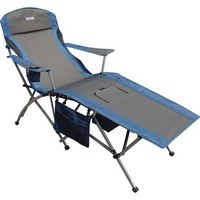
Reclined Chair

Image of reclined chair

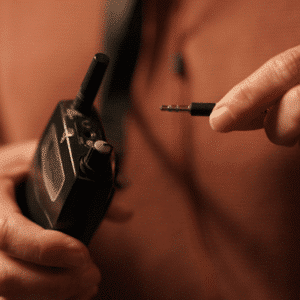
Earphones

Image of audio unit

We use an audio system in most of our sky shows. 

You should remember to bring your 3.5mm round plug/jack earphones – or you can purchase some when making an online booking if they are required for your event.

The following earphone connectors are not suitable – flat-style Apple Lightning, USB, Bluetooth or WiFi.