“Towers in Space” will transform life in remote Australia

Picture of Outback Astronomy
Outback Astronomy
Published on 05/01/2026
BlueBird-6 direct-to-device satellite launching from India on an ISRO rocket in December 2025 - Towers in Space blog.

“Towers in space” are large low-Earth orbit satellites designed to connect directly to ordinary mobile phones. Instead of relying solely on ground-based towers, these satellites act like mobile towers in the sky, delivering coverage to remote and regional areas that have long suffered from blackspots. In 2026, new satellite constellations such as AST SpaceMobile’s BlueBird network are beginning to make this vision a reality for outback Australia.

“Towers in space” will transform life in remote Australia

People living in regional and remote Australia are all too familiar with the need to be “near a tower”. Mobile phone tower, that is.

Blackspots, patchy reception, long stretches of highway with no signal and the constant feeling that we’re last on the upgrade list – these have been part of life in the outback. But that era is ending.

A new generation of satellites is rising above us, and they’re not just for internet dishes or satellite phones. These spacecraft are designed to connect ordinary mobile phones, the ones we already carry, directly to space.

The company leading this shift is AST SpaceMobile, builder of the world’s first space‑based mobile broadband network designed for direct‑to‑device (D2D) connectivity. Their newest satellite, BlueBird‑6, launched on 24 December 2025, is the first of a powerful new class that will reshape communications for people everywhere, especially those of us living far from major cities.

And 2026 is the year the constellation begins to grow.

What AST SpaceMobile is building. Why it matters.

AST SpaceMobile’s mission is simple – “connecting the unconnected”. They are finding a way to enable every person on Earth to be able to make a phone call or send a message, no matter where they are.

  • No satellite phone.
  • No special antenna.
  • No bulky hardware.

Just your normal 4G or 5G handset.

To make this possible, AST is deploying a constellation of large, powerful satellites in low Earth orbit (LEO). These spacecraft act like mobile towers in the sky, covering vast regions of the planet as they orbit.

  • We are calling them “towers in space”.

For remote communities like Broken Hill, this is a game‑changer. It means:

  • No more blackspots.
  • No more waiting for towers.
  • No more being last on the list.
  • Reliable emergency connectivity.
  • Coverage on highways, stations, mines and national parks.

We’re happy because it means great mobile phone coverage for Outback Astronomy!

Yes, AST’s roll-out of a new breed of satellites means that, in the not too distant future, we can receive a phone signal by being connected to “towers in space” because it is not possible to be connected to the tower on the ground, located 10km away at the Broken Hill post office.

For the first time, us ordinary folks located in the outback or the remote parts of Australia, also known as “the bush”, will have the same access to mobile connectivity as the ordinary folks in the cities have had for a few decades now.

Meet BlueBird 6, the first of the new breed

BlueBird‑6 is the first of AST’s next‑generation satellites, known as the BlueBird Block‑2 class. It is one of the most advanced communications spacecraft ever launched.

Key descriptors:

  • Mass of about 6100kg
  • Will orbit between 505km and 520km altitude
  • Orbit inclination of 53° (explained below)
  • Orbital period of about 95 minutes
  • Antenna size (an array structure) of about 223 m² (size of a small house)
  • Purpose is to provide direct‑to‑device (D2D) mobile broadband
  • Launched from India, on vehicle ISRO LVM3‑M6
  • Launched on 24 December 2025

The most striking feature is its phased‑array antenna, a giant flat panel that unfolds in space. This surface acts both as a high‑gain communications array and a solar power generator.

At 223 square metres, it’s one of the largest antenna structures ever deployed on a commercial LEO satellite.

How Direct-to-Device Satellites Work

Your phone already knows how to talk to a mobile tower. AST’s satellites are designed to look like a tower to your phone, using standard mobile protocols.

The satellite beams a signal down to Earth.

Your phone beams a signal back up.

The satellite connects you into the terrestrial network.

It’s the same experience as normal mobile coverage, just coming from 500km above your head.

Because the satellites orbit Earth every 95 minutes, AST will eventually deploy dozens of them, forming a moving network that hands off coverage from one spacecraft to the next.

Understanding the Orbit — Perigee, Apogee, and Inclination

Perigee (505km) – the lowest point of the orbit above Earth’s surface.

Apogee (520km) – the highest point of the orbit.

BlueBird‑6’s orbit is almost circular, wobbling only 15 km between its lowest and highest points.

Inclination (53°) – this is the tilt of the orbit relative to Earth’s equator.

  • = orbiting above the equator
  • 90° = over the poles
  • 53° = a mid‑latitude orbit that covers most of the world’s population

Here’s a simple way to picture it. Imagine a ring around Earth that leans over by 53 degrees above and below the equator. As the planet spins beneath it, the satellite sweeps over a huge belt stretching from southern Australia up past Europe and North America. This orbit passes over Australia regularly, including the outback.

Can we see it?

With a 223 m² reflective surface, BlueBird‑6 is bright enough to be seen with naked eyes under good conditions. In typical passes it will be bright like the stars in “The Pointers” and the difficult to see stars in Crux (Southern Cross). If you have been to one of our instructional sky shows, you will appreciate this description – ranging from magnitude one (like Alpha Centauri) to magnitude three (close to the dimness of Delta Crucis in the Southern Cross).

On some occasions there may be brighter flashes or glints, depending upon you vantage point.

For sky watchers, this adds a new class of objects to track and a new story that we have to tell visitors to our area when we highlight any satellites during our sky shows.

How to track BlueBird 6

Or you can get into satellite tracking at home. Using your home PC or an app on your phone, find BlueBird‑6 using Heavens‑Above, N2YO, Stellarium or SkySafari. Search for “BlueBird‑6” or its catalogue number once published.

2026: The year the constellation begins to grow

BlueBird‑6 is only the beginning. AST SpaceMobile has announced multiple launches throughout 2026, with more Block‑2 satellites joining the constellation.

Each satellite adds more coverage, more capacity and more reliability.

By the end of 2026, AST aims to have enough satellites in orbit to begin initial commercial service in key regions, with global service following as the constellation expands. Their website says 45-60 satellites should be launched by end 2026. BlueBird-6 was assembled in Texas.

Who else is building “towers in space”?

AST SpaceMobile is the most ambitious in terms of full broadband to ordinary phones, but they’re not alone.

Major players:

  • AST SpaceMobile – large satellites, full 4G/5G broadband
  • Starlink Direct to Cell – thousands of satellites with smaller D2D payloads
  • Lynk Global – SMS‑only service so far
  • 5G NTN ecosystem – standards‑based satellite‑to‑phone work by multiple operators

Australian players:

Australia has satellite manufacturers, but none yet building full D2D constellations:

  • Fleet Space – IoT satellites
  • Myriota – low‑bandwidth IoT
  • Gilmour Space Technologies – Australia’s emerging launch provider, not a D2D operator

Australia is entering the space industry seriously, but the first “towers in space” we’ll use will be built offshore.

Will AST SpaceMobile actually help Australia?

Technically, yes. Commercially, likely, but not first in line.

AST’s satellites cover Australia naturally due to their orbit. But AST must partner with Australian carriers (Telstra, Optus, TPG/Vodafone) before service can begin here.

So we expect that services will be rolled out in the USA first, then other regions, with Australia later in the decade, depending on partnerships. For Broken Hill, this means we will see the satellites overhead long before we can connect to them.

However, the technology is coming, and it’s designed for places exactly like ours.

Safety in space and avoiding collisions

Despite the growing number of satellites, LEO is not a chaotic swarm.

Key safety mechanisms:

  1. Precise tracking. Radar and optical systems track satellites and debris continuously.
  2. Conjunction warnings. Operators receive alerts when two objects may pass too close.
  3. Autonomous manoeuvres. Starlink satellites can automatically dodge predicted collisions. AST satellites can manoeuvre too.
  4. Huge distances. Even in “crowded” LEO, satellites are separated by vast volumes of space.

Put simply, it’s more like careful air‑traffic control than a sky full of ping‑pong balls.

Will towers become obsolete?

No, but blackspots will.

What will change:

  • Remote areas will gain satellite‑backed mobile coverage.
  • Emergency connectivity will become universal.
  • Travellers will no longer be “out of range”.

What won’t change:

  • Cities and towns will still rely on ground towers.
  • High‑capacity data (streaming, dense usage) still needs terrestrial networks.

For Broken Hill, within a few years, we may expect the end of true blackspots. But towers won’t disappear; satellites will simply fill the gaps.


Image:  The BlueBird-6 launch from the Satish Dhawan Space Centre, Sriharikota, India, 24 December 2025.

Frequently Asked Questions

“Towers in space” is a simple way of describing large low-Earth orbit satellites that act like mobile phone towers. Instead of connecting your phone to a tower on the ground, your phone connects directly to a satellite overhead using standard 4G or 5G signals.

No. Direct-to-device satellite systems are designed to work with ordinary smartphones. There is no need for a satellite phone, external antenna or dish. If your phone can already connect to a 4G or 5G mobile network, it can use this technology once it is enabled by your carrier.

Starlink is primarily an internet service that requires a dedicated dish. “Towers in space” are focused on mobile phone connectivity, including calls, text messages and mobile data, using the phone already in your pocket. The two systems serve different purposes and can complement each other.

Over time, yes. Satellite-based mobile coverage is designed specifically to fill the gaps where ground towers cannot reach. While towns and cities will still rely on terrestrial towers, remote highways, stations, national parks and emergency situations stand to benefit the most.

The satellites already pass over Australia, but services can only begin once partnerships are in place with Australian mobile carriers such as Telstra, Optus or TPG. Initial services are expected to roll out overseas first, with Australia likely to follow later in the decade.

Yes, some can. Large satellites like BlueBird-6 have reflective surfaces that can make them visible to the naked eye during certain passes. Under dark outback skies, they may appear as moving points of light similar in brightness to familiar stars, adding a new class of objects for sky watchers to observe.

Are you ready to book your Outback Astronomy experience?

Explore our upcoming night sky sessions and reserve your spot beneath the big Broken Hill skies.

More Astronomy Stories You Might Enjoy

×

PLUS Ticket

PLUS Ticket Inclusions
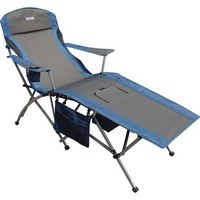
– Seating – reclined chair
– Sleeping Bag (in cooler months)
– Loan of an audio unit
– Optics suitable for the event*
– Side table
– Food and beverage service

Extras at Time of Booking
– Ear phones (or bring your own)
– Hot chocolate
– Options for other food, drinks

* Varies according to conditions.
** Only used in reclined chairs.

Standard Ticket

Standard Ticket Inclusions
– Seating
– Loan of an audio unit
– Optics suitable for the event*

Extras at Time of Booking
– Ear phones (or bring your own)
– Hot chocolate
– Reclined chair
– Reclined chair, sleeping bag**
– Options for other food, drinks

* Varies according to conditions.
** Only used in reclined chairs.

Reclined Chair

Image of reclined chair

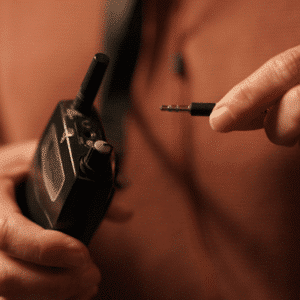
Earphones

Image of audio unit

We use an audio system in most of our sky shows. 

You should remember to bring your 3.5mm round plug/jack earphones – or you can purchase some when making an online booking if they are required for your event.

The following earphone connectors are not suitable – flat-style Apple Lightning, USB, Bluetooth or WiFi.