Awe, Starbathing and the Surprising Benefits of Stargazing
Could looking up at the night sky improve your wellbeing? Discover the science of awe, the rise of starbathing, and why Broken Hill is the perfect place to reconnect under the stars.

December brings two major sky events together in 2025: the Geminid meteor shower in the early-morning hours and Jupiter rising into the early evening sky. This guide explains what the Geminids are, why they appear every December, how to view and photograph them, and where to look from Broken Hill and the Far West. It also outlines Jupiter’s return to prominence, how to spot it near well-known summer constellations and what to expect when viewing it through binoculars or telescopes. With both fast meteor action before dawn and slow, detailed planetary observing after sunset, Geminids and Jupiter 2025 offer a rich month of stargazing for Outback Astronomy guests and sky watchers across Australia.
December brings two very different but equally exciting celestial events back into the Broken Hill night sky, making Geminids and Jupiter 2025 a standout month for stargazing. In the early hours of the morning, the Geminid meteor shower puts on one of the most reliable displays of the year. Later in the month, Jupiter returns to prominence in the early evening sky, becoming a feature object in our Outback Astronomy sky shows throughout this summer and into autumn.
Here is what to look for, when to look and how to make the most of both.
The Geminids are one of the strongest and most consistent meteor showers visible from Australia. Unlike most meteor showers, which come from comets, the Geminids originate from an unusual object called 3200 Phaethon, an asteroid-like body that sheds rocky debris as it orbits the Sun.
Each year in December, the Earth passes through this ancient debris trail. As the tiny fragments enter our atmosphere at high speed, they burn up and produce the streaks of light we call meteors. Because Earth crosses the same stream every year, the Geminids appear at the same time each December, making them one of the most predictable showers.
The Geminids are already active now and will remain visible for several weeks. However, the best viewing for our Geminids and Jupiter 2025 guide occurs in mid-December, when meteor rates reach their peak and the conditions favour frequent bright streaks.
For Broken Hill and the Far West of NSW, the ideal time to watch is after midnight and into the pre-dawn hours. During this window, the constellation Gemini sits high in the north-eastern sky and we are on the forward-facing side of Earth’s orbit, increasing the number of visible meteors.
You can expect:
The meteors appear to radiate from the constellation Gemini, near the bright stars Castor and Pollux, in the north-east. However, you do not need to stare directly at Gemini. Meteors can appear anywhere across the sky, and the longest, most dramatic streaks often occur well away from the radiant.
For best results:
Meteor watching does not require a telescope or binoculars. In fact, naked eye viewing is best.
We recommend:
Even short observing sessions can be rewarding, but the longer you watch, the more likely you are to see bright fireballs – yes, really, if you are lucky enough, it is possible to see the flames on some meteors.
Astrophotography of meteors is about patience and wide coverage rather than magnification.
Basic setup:
Point the camera toward a dark patch of sky about 30 to 60 degrees away from Gemini and let it run through the night. Most frames will be empty, but when a bright meteor passes through your field of view, the results can be spectacular.
You should also expect to see hundreds of satellite streaks – once you capture both, and get to view a meteor vs a satellite image or series of images, there is no mistaking the difference between the two. Think of it like a two-dimensional comparison of the paths taken by the tortoise (satellite) and the hare (meteor).
While the Geminids belong firmly to the late-night and early-morning hours, Jupiter becomes the December evening showstopper. In our Geminids and Jupiter 2025 guide, this giant planet takes centre stage as it rises earlier each night and becomes easily visible soon after sunset.
From late December, Jupiter will:
Jupiter is unmistakable. It appears as a steady, cream-coloured point of light that does not twinkle like stars do. However, any celestial object viewed low on a flat horizon will seem to quiver due to light scattering through Earth’s atmosphere. The higher Jupiter is, the less its surface will appear to quiver or shimmer.
In December, Jupiter is hosted by Gemini, and is therefore amongst the iconic summer objects and constellations, including:
If you look toward the eastern and north-eastern sky after sunset, the first bright object that quickly dominates the view is Jupiter. Over the course of the evening it climbs higher, making it easier to observe in detail. Saturn is also high overhead and tending to be lower in the north western sky but still worthy of mention.
What makes Jupiter especially impressive is how it contrasts with the surrounding sky:
Through powerful binoculars, with excellent eyesight, you may see Jupiter’s largest moon, Ganymede, depending upon where it is in its orbit about the planet. Otherwise, through our telescopes at Outback Astronomy, the view clearly shows the colourful cloud bands and the four largest moons as they orbit the planet, changing positions night after night.
Check out Jupiter when viewed with the powerful James Webb Space Telescope’s NIRCam (Near-Infrared Camera), imaged attached.
The JWST discovered a new feature in Jupiter’s atmosphere – a high-speed jet stream, which spans more than 4,800 km wide, sitting over Jupiter’s equator above the main cloud decks. The discovery of this jet is giving insights into how the layers of Jupiter’s famously turbulent atmosphere interact with each other, and how the JWST is uniquely capable of tracking those features. Read more here.
As Jupiter rises earlier each evening through summer, viewing becomes more convenient for families and visitors. See our calendar of events to book in your next night sky tour.
We incorporate Jupiter (and Saturn) viewing into our evening sky shows, giving guests the chance to observe through large telescopes, with powerful binoculars and the best way, with naked eyes.
Because the Geminid meteor shower is best after midnight, we leave meteor watching to independent early-morning observers who enjoy the quiet magic of a pre-dawn sky. We can offer suggestions on timing, direction and camera setup to anyone planning their own Geminid viewing session.
December brings a perfect mix of slow, detailed planetary observing and fast, dramatic meteor activity. Whether you are watching Jupiter climb in the evening twilight or rugging up for a quiet Geminid display, watch before sunrise, the Broken Hill sky continues to deliver world-class natural theatre.
Image: This image of Jupiter from NASA’s JWST shows stunning details in infrared light. In this image, brightness indicates high altitude. The numerous bright white “spots” and “streaks” are likely very high-altitude cloud tops of condensed convective storms. Auroras, appearing in red in this image, extend to higher altitudes above both the northern and southern poles of the planet. By contrast, dark ribbons north of the equatorial region have little cloud cover. Image taken 27 July 2022. (Credits – NASA, ESA, CSA, STScI, Ricardo Hueso (UPV), Imke de Pater (UC Berkeley), Thierry Fouchet (Observatory of Paris), Leigh Fletcher (University of Leicester), Michael Wong (UC Berkeley), Joseph DePasquale (STScI).
The Geminids peak in mid-December, with the best viewing after midnight and before sunrise when Gemini is high in the north-eastern sky.
Earth crosses the debris stream of asteroid-like object 3200 Phaethon each year, producing predictable meteor activity.
From late December, Jupiter rises earlier each night and becomes visible soon after sunset, standing out as a bright, steady cream-coloured light.
Yes. Jupiter is best in the evening, while the Geminids are strongest after midnight, offering both slow planetary observing and fast meteor action in a single night.
Explore our upcoming night sky sessions and reserve your spot beneath the big Broken Hill skies.

Could looking up at the night sky improve your wellbeing? Discover the science of awe, the rise of starbathing, and why Broken Hill is the perfect place to reconnect under the stars.

A major court decision has secured new protections for Outback Astronomy. Here’s what it means for our dark skies, your experience, and the future of stargazing in Broken Hill.

Discover stargazing in Broken Hill and unwind under clear outback skies. A relaxing, awe-filled experience perfect for families, couples and travellers seeking connection and perspective.
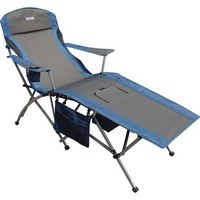
PLUS Ticket Inclusions
– Seating – reclined chair
– Sleeping Bag (in cooler months)
– Loan of an audio unit
– Optics suitable for the event*
– Side table
– Food and beverage service
Extras at Time of Booking
– Ear phones (or bring your own)
– Hot chocolate
– Options for other food, drinks
* Varies according to conditions.
** Only used in reclined chairs.
Standard Ticket Inclusions
– Seating
– Loan of an audio unit
– Optics suitable for the event*
Extras at Time of Booking
– Ear phones (or bring your own)
– Hot chocolate
– Reclined chair
– Reclined chair, sleeping bag**
– Options for other food, drinks
* Varies according to conditions.
** Only used in reclined chairs.
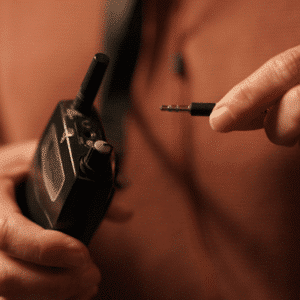
We use an audio system in most of our sky shows.
You should remember to bring your 3.5mm round plug/jack earphones – or you can purchase some when making an online booking if they are required for your event.
The following earphone connectors are not suitable – flat-style Apple Lightning, USB, Bluetooth or WiFi.