Awe, Starbathing and the Surprising Benefits of Stargazing
Could looking up at the night sky improve your wellbeing? Discover the science of awe, the rise of starbathing, and why Broken Hill is the perfect place to reconnect under the stars.
Discover the Moon in Broken Hill is a guided lunar viewing experience by Outback Astronomy, designed for curious travellers, families and lifelong learners who want more than casual stargazing.
Using powerful telescopes under vast outback skies, guests explore the Moon’s craters, plains and shadows while connecting what they see to real human spaceflight, including NASA’s Artemis II mission. The experience blends practical astronomy, current space science and relaxed storytelling in a small-group setting.
This guide explains what happens on the night, who the event suits best, and how to get the most from your Moon gazing experience during the Easter school holidays.
It’s easy to get swept up in the endless lists of “must-see” attractions, but what makes a night under the outback sky linger in your memory is rarely a checklist. It’s the mix of curiosity, shared learning and the simple joy of being present together. Outback Astronomy in Broken Hill has designed its Discover the Moon event for exactly this sort of moment – a place where seasoned skywatchers, curious families and lifelong learners gather to see the Moon not as a distant object, but as a fascinating, dynamic neighbour.
Over the Easter holidays (3 and 4 April 2026), small groups settle onto benches or their own folding chairs in the cool, open air. There’s a quiet thrill to unpacking your binoculars, positioning yourself for the clearest view and feeling the anticipation build as night falls. The public address system hums to life – not intrusive, but just enough to carry the guide’s voice, even if the wind picks up.
The session is shaped by storytelling, science and a deep respect for both. It’s an approach that feels honest and grounded, inspirational for young children and never scripted. You’re invited to trace the Moon’s surface, see its bright plains, sharp-edged craters and shadowed mountains, through powerful telescopes. The sky guide’s descriptions are rich with detail, but not overwhelming. They share what it’s like to watch astronauts prepare for NASA’s Artemis II mission, set to push human exploration farther than ever before. The science is up-to-date and delivered in a way that feels like a conversation around a campfire, not a lecture hall.
By April 2026, the status of the Artemis II mission will be known, and your sky guide will provide the latest context or reflections from the mission as appropriate. The European Space Agency’s artwork of the mission’s trajectory is attached. See the NASA spaceflight mission interpretative video also, at this link.
For children, the sky guide enjoys sharing the prospective future – the things that people on Earth in the future will be doing, and how the Moon is expected to be so important and relevant for future careers and human lives. Outback Astronomy may use Moon maps and other aids to help you learn about our natural satellite and demonstrate how Moon gazing can be helpful in coming to learn sky mechanics – the motions of the celestial bodies most relevant for us ie the Sun, the Moon, Earth and any other visible planets on the night. These motions, once understood, become the basis for lifelong astronomy and stargazing pursuits.
It is possible that some stargazing events can feel impersonal or surface-level. This one quietly encourages you to become part of the story. You’ll feel part of it simply by being under the big outback sky, with the flat horizon all about you and the dark starry sky like a big dome above. Rather than simply pointing and naming, the sky guide draws you into the narrative of human spaceflight – perhaps you can imagine the tension and risk faced by astronauts. We may recount the events as experienced by the Artemis II crew if they have completed their mission – to fly an enormous loop around the far side of the Moon. This isn’t just a look through a lens or a bunch of words. Outback Astronomy extends an invitation to wonder what it means to explore, to test boundaries and to do it together. Outback Astronomy’s sky guide will likely remind guests some of the words spoken by the 2026 Australian of the Year, Katherine Bennell-Pegg, space engineer and astronaut, during the awards ceremony:
“You can’t see borders from up there, just a fragile shared home and a powerful truth – we’re all in this together. Because space is not about escaping the earth, but about helping us see it more clearly.”
The event is refreshingly straightforward. Adults pay $70, and children (aged 5 to 15) are $20 each. The experience lasts an hour. Bench seating is available, but you’re encouraged to bring your own folding chair and binoculars if you want to linger or look around while waiting your turn at the telescope.
There’s no background music or personal audio. A public address speaker at gentle volume will ensure the sky guide can be heard. The event is designed to be accessible, with a focus on inclusion and comfort. If you’re someone who likes to jot down notes, record voice memos or simply sit back and take in the stillness, you’ll find space for all of that here.
Pack warm jackets and trousers, and plan to wear closed in shoes. Early April is generally warm though cool changes can be expected at any time in the outback. Bring a camera and tripod if you want to capture the Moon on the eastern horizon.
Outback Astronomy texts weather conditions and other details about the event on the day of your booking, so be sure to include correct mobile phone numbers in the booking form.
Book into Discover the Moon via the Outback Astronomy calendar, on dates 3 and 4 April 2026.
Arrive early – as indicated in the text message on the day. There’s a quiet magic in watching the sky shift from deep blue to inky black, the air cooling as anticipation builds. Dress warmly and don’t forget a notebook and camera, if you’re someone who likes to document small discoveries.
If you’re travelling with friends or family, set an intention to share what stands out for each of you. The Moon draws out a sense of wonder in people of all ages and those moments of shared excitement, pointing out a feature, trading stories, often turn into the memories you revisit long after the event.
Yes, bringing your own folding chair is welcome and encouraged for maximum comfort. Bench seating is also provided. Bring binoculars too if you have some as none will otherwise be used in this event.
Children aged 5 to 15 are welcome and often find the experience captivating, especially with the hands-on aspect of telescope viewing.
Sessions use a public address system to adapt to wind and larger groups, but poor weather may impact viewing. Check with Outback Astronomy for up-to-date advice and rescheduling options. If unable to reschedule guests are refunded.
None! The event is designed for all levels of interest and knowledge, starting with basic lunar features and adding in as much science as you’re curious to take in.
Yes, the guide will share updates on the Artemis II mission and ongoing lunar exploration, connecting your experience to the broader story of human spaceflight. Note that the Artemis II mission may have been completed by April. If so, a review or update of that mission will be supplied as appropriate.
Explore our upcoming night sky sessions and reserve your spot beneath the big Broken Hill skies.

Could looking up at the night sky improve your wellbeing? Discover the science of awe, the rise of starbathing, and why Broken Hill is the perfect place to reconnect under the stars.

A major court decision has secured new protections for Outback Astronomy. Here’s what it means for our dark skies, your experience, and the future of stargazing in Broken Hill.

Discover stargazing in Broken Hill and unwind under clear outback skies. A relaxing, awe-filled experience perfect for families, couples and travellers seeking connection and perspective.
PLUS Ticket Inclusions
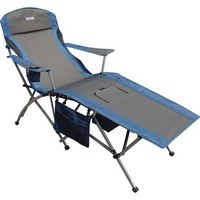
– Seating – reclined chair
– Sleeping Bag (in cooler months)
– Loan of an audio unit
– Optics suitable for the event*
– Side table
– Food and beverage service
Extras at Time of Booking
– Ear phones (or bring your own)
– Hot chocolate
– Options for other food, drinks
* Varies according to conditions.
** Only used in reclined chairs.
Standard Ticket Inclusions
– Seating
– Loan of an audio unit
– Optics suitable for the event*
Extras at Time of Booking
– Ear phones (or bring your own)
– Hot chocolate
– Reclined chair
– Reclined chair, sleeping bag**
– Options for other food, drinks
* Varies according to conditions.
** Only used in reclined chairs.
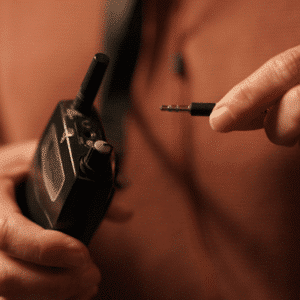
We use an audio system in most of our sky shows.
You should remember to bring your 3.5mm round plug/jack earphones – or you can purchase some when making an online booking if they are required for your event.
The following earphone connectors are not suitable – flat-style Apple Lightning, USB, Bluetooth or WiFi.