Visitor from beyond the stars

Picture of Outback Astronomy
Outback Astronomy
Published on 04/11/2025
Comet 3I/ATLAS interstellar object — NASA Hubble image 2025

Comet 3I/ATLAS - Visitor from beyond the stars

 In July 2025, NASA’s ATLAS telescope spotted Comet 3I/ATLAS, the third confirmed interstellar object ever found. Some headlines claimed it might be an alien spacecraft – but scientists including Professor Brian Cox and Harvard astrophysicist Avi Loeb say there’s no evidence for that.

This article explains what 3I/ATLAS actually is, what makes its chemistry unique, and why scientific disagreement is normal, not proof of mystery. You’ll learn how cosmic radiation shaped this ancient visitor from another star system, how telescopes like JWST studied it, and why its story matters for anyone who loves stargazing under the Australian outback sky.

A Visitor From Deep Space

In July 2025, astronomers using NASA’s ATLAS telescope system in Chile spotted a faint, fast-moving object that clearly wasn’t from our solar system. They named it 3I/ATLAS, making it the third confirmed interstellar object after ‘Oumuamua (2017) and Borisov (2019).

This icy traveller is speeding through on a one-way trip, swinging around the Sun, lighting up briefly, then vanishing back into the darkness between the stars.

It’s not a spacecraft, not a probe, and not anything built by aliens. It’s behaving just like a comet, releasing gas and dust as sunlight warms it.

Why Scientists Are Excited

NASA-affiliated astronomers studying 3I/ATLAS found something extraordinary – its chemical mix is unlike any comet we’ve ever seen.

Using instruments like the James Webb Space Telescope (JWST), scientists discovered that the comet’s atmosphere, or “coma,” contains 7.6 times more carbon dioxide than water. That’s a record. Most comets in our solar system show the opposite; water dominates and CO₂ is a minor trace gas.

The high carbon dioxide levels, red-tinted glow and other data suggest 3I/ATLAS has been bombarded by cosmic rays for billions of years, which slowly transformed its icy surface. This radiation “cooking” turned ordinary ice into complex carbon-rich material.

So, instead of a pristine fossil from another solar system, 3I/ATLAS is likely a weathered wanderer, an ancient body whose surface tells the story of its long journey through interstellar space.

Avi Loeb and the “Alien Spaceship” Story

Harvard astrophysicist Professor Avi Loeb, leader of the Galileo Project, has long encouraged scientists to keep an open mind about unexplained cosmic objects.

When 3I/ATLAS appeared, Loeb wrote a short blog urging the research community not to dismiss unusual data too quickly. He didn’t claim the comet was an alien craft. He simply said we should ask the question scientifically before ruling it out.

Unfortunately, headlines twisted that into click-bait. Articles and social-media posts screamed, “Harvard professor says alien ship hiding behind the Sun!” even though that’s not what Loeb said.

Physicist Professor Brian Cox quickly stepped in, reminding everyone that there’s zero evidence for anything artificial. Every observation so far fits normal comet behaviour: natural orbit, gas jets, dust tail and chemical composition.

Disagreement Is Part of Science

Not all scientists interpret the same data identically. Some emphasise chemical evidence for radiation processing; others suggest formation differences in another star system.

This is how science works – open debate, testing, refinement and even sharp disagreement. It isn’t a sign of chaos; it’s progress.

When researchers like Loeb challenge assumptions, they’re playing an important role. Science needs both sceptics and explorers, people who double-check the math and those who ask “what if?”

What matters is evidence, not popularity. Every serious scientist agrees that extraordinary claims require extraordinary proof and so far, no alien proof exists.

What We Actually Know

  • 3I/ATLAS is venting gas, glowing, and forming a tail – classic comet behaviour.
  • It’s composed of frozen gases and rock, likely born around an ancient, metal-poor star.
  • It’s a few kilometres wide; solid, not hollow.
  • It’s travelling on a hyperbolic orbit, meaning it will leave our solar system forever once it swings past the Sun.
  • It poses no threat to Earth.

In short: it’s a comet, not a craft. A messenger, not a mothership.

Should You Worry?

Not at all.

If you’re a grey nomad parked under the outback stars, a young professional relaxing after work, or a student still in school, there’s no reason to be alarmed.

3I/ATLAS is a natural visitor passing safely through the neighbourhood. The only thing to fear would be missing the wonder of it. So, if you have clear skies and binoculars, take a look. You may be seeing a traveller from another star system.

Why It Matters

3I/ATLAS reminds us that the universe is vast and full of wanderers. It challenges scientists to think deeply about how radiation, chemistry and time shape the cosmos.

It also reminds us to be critical thinkers; to question wild claims, look for evidence and stay curious.

Glossary - What Those Terms Mean

Term

Explanation (Plain English)

ATLAS telescope system

A NASA-funded sky-survey network called Asteroid Terrestrial-impact Last Alert System. Its job is to spot asteroids or comets that could approach Earth. One of its telescopes in Chile discovered 3I/ATLAS.

Interstellar object

A natural object (like a comet or asteroid) that came from outside our solar system, meaning it wasn’t born around the Sun. Examples: 1I/Oumuamua, 2I/Borisov and 3I/ATLAS.

Naming convention (eg 3I/ATLAS)

The number shows the discovery order of interstellar objects (1I, 2I, 3I …). “I” stands for Interstellar, and “ATLAS” credits the telescope system that found it.

Outgassing

When sunlight warms a comet’s icy surface, frozen gases turn into vapour and jet outward. These jets push dust into space, forming the bright tail we see.

Comet

An icy body made mostly of frozen gases, dust and rock. When close to the Sun, it develops a glowing coma (atmosphere) and tail. Famous examples include Halley’s Comet and 67P/Churyumov-Gerasimenko.

Carbon dioxide levels (in 3I/ATLAS)

The comet’s CO₂ is 7.6 times higher than water, extremely unusual. This suggests its outer layers were altered by radiation, not formed that way.

Cosmic rays

High-energy particles (mostly protons) that travel through space from exploding stars and other energetic sources. They can change the chemistry of ice and rock over time.

Galileo Project

A Harvard-based research initiative founded by Avi Loeb to search systematically for physical evidence of extraterrestrial technology, using transparent scientific methods.

Predictable orbit of a comet

The path of a comet is determined by gravity. Once measured, its future position can be predicted precisely, another reason scientists know 3I/ATLAS is natural.

James Webb Space Telescope (JWST)

NASA’s newest flagship space telescope, operating mainly in infrared light. It can detect faint heat signatures and chemical fingerprints in comets, planets, and galaxies.

Hyperbolic orbit

A path shaped like an open curve, not a closed ellipse. Anything on a hyperbolic orbit is moving too fast to stay bound to the Sun; it will fly away forever.

Frequently Asked Questions

Comet 3I/ATLAS is the third confirmed interstellar object ever found. Discovered in July 2025 by NASA’s ATLAS telescope in Chile, it’s a natural comet travelling through our solar system on a one-way path back into interstellar space.

Because every observation fits normal comet behaviour – gas jets, dust tail, and a predictable orbit. Instruments such as the James Webb Space Telescope show it’s made of frozen gases and rock, not anything artificial.

It contains about 7.6 times more carbon dioxide than water, an extreme ratio that suggests billions of years of cosmic-ray exposure have chemically altered its icy surface.

Professor Brian Cox emphasises that there’s no evidence for alien technology, while Harvard astrophysicist Avi Loeb encourages open scientific inquiry. Both agree that evidence, not speculation, must guide conclusions.

Depending on brightness and timing, it may be faintly visible with binoculars under dark-sky conditions. Check Outback Astronomy’s In the Sky updates for current viewing information.

References and Further Reading

The following information was used to inform this blog article:

  1. Battison, J. (2025, 1 Nov). Brian Cox hits out at ‘alien spaceship’ theories as he shares ‘reliable’ sources. LADbible Science News. Retrieved from https://www.ladbible.com/news/science/brian-cox-3i-atlas-comet-aliens-275360-20251101
  2. Maggiolo, R., Dhooghe, F., Gronoff, G., de Keyser, J., & Cessateur, G. (2025). Interstellar Comet 3I/ATLAS: Evidence for Galactic Cosmic Ray Processing. arXiv: 2510.26308 (13 pages, 5 figures, submitted to The Astrophysical Journal).
  3. Loeb, A. (2025, 29 Oct). A Q&A on 3I/ATLAS at Perihelion. Medium. Retrieved from https://avi-loeb.medium.com/a-q-a-on-3i-atlas-at-perihelion-62b7d592519b
  4. Tangermann, V. (2025, 24 Oct). Ground control to mothership – Astronomer Suspects Mysterious Object Is Up to No Good While It’s Hidden Behind the Sun: “If You Want to Take a Vacation, Take It Before Then”. Futurism. Retrieved from https://futurism.com/space/avi-loeb-3i-atlas-object-hidden-behind-sun

Image: NASA, ESA, David Jewitt (UCLA); Image Processing: Joseph DePasquale (STScI)

Are you ready to book your Outback Astronomy experience?

Explore our upcoming night sky sessions and reserve your spot beneath the big Broken Hill skies.

More Astronomy Stories You Might Enjoy

×

PLUS Ticket

PLUS Ticket Inclusions
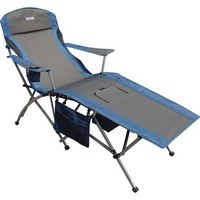
– Seating – reclined chair
– Sleeping Bag (in cooler months)
– Loan of an audio unit
– Optics suitable for the event*
– Side table
– Food and beverage service

Extras at Time of Booking
– Ear phones (or bring your own)
– Hot chocolate
– Options for other food, drinks

* Varies according to conditions.
** Only used in reclined chairs.

Standard Ticket

Standard Ticket Inclusions
– Seating
– Loan of an audio unit
– Optics suitable for the event*

Extras at Time of Booking
– Ear phones (or bring your own)
– Hot chocolate
– Reclined chair
– Reclined chair, sleeping bag**
– Options for other food, drinks

* Varies according to conditions.
** Only used in reclined chairs.

Reclined Chair

Image of reclined chair

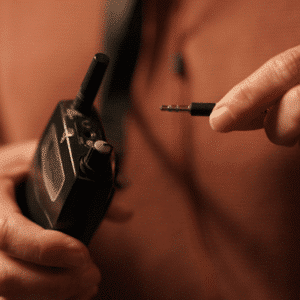
Earphones

Image of audio unit

We use an audio system in most of our sky shows. 

You should remember to bring your 3.5mm round plug/jack earphones – or you can purchase some when making an online booking if they are required for your event.

The following earphone connectors are not suitable – flat-style Apple Lightning, USB, Bluetooth or WiFi.