Artemis II Mission: NASA’s Return to the Moon and the New Moon Race

Picture of Outback Astronomy
Outback Astronomy
Published on 11/02/2026
Artemis II mission astronauts in front of NASA’s SLS rocket at Kennedy Space Centre 2026

Artemis II and the New Moon Race

Artemis II is NASA’s first crewed mission of the Artemis program, scheduled no earlier than March 2026. The mission will send four astronauts on a 10-day journey around the Moon using the Space Launch System (SLS) rocket and Orion spacecraft. It will not land on the Moon but will test life support, navigation and deep-space systems ahead of future lunar landings under Artemis III and beyond.

What Is the Artemis Program?

Artemis is NASA’s long‑term program to return humans to the Moon and build a sustained presence there. The experience gained will support future crewed missions to Mars. It isn’t a single mission. It’s a campaign involving multiple flights, landers, surface systems and a small lunar‑orbiting space station called Gateway.

Why Is It Called Artemis?

The name is deliberate. Artemis is the twin sister of Apollo in Greek mythology and the goddess of the Moon. NASA chose the name to honour the Apollo era and to signal a new chapter that includes sending the first woman and the first person of colour to the lunar surface.

Artemis I – The First Test Flight

Artemis I launched in late 2022. It was an uncrewed test flight of the Space Launch System (SLS) rocket and the Orion spacecraft. Orion travelled to a distant retrograde orbit around the Moon and returned to Earth. The mission proved the rocket, the spacecraft, navigation, communications and the heat shield during high‑speed re‑entry.

Artemis II – The First Crewed Mission

Artemis II is the second flight of SLS and Orion. It will be the first to carry astronauts. It will not land on the Moon. NASA’s current plan includes:

  • Crew: Four astronauts
  • Duration: About ten days
  • Launch: No earlier than March 2026
  • Hardware: SLS rocket and Orion spacecraft

The mission will launch the crew on SLS from Kennedy Space Centre, test Orion’s life support, communications, propulsion and manual and automated control in Earth orbit, fire Orion’s main engine to send the crew on a free‑return path around the Moon. It will loop around the far side of the Moon then return to Earth and splash down in the ocean It is essentially a dress rehearsal with people before NASA attempts a landing on Artemis III.

How Many Artemis Missions Are Planned?

NASA has outlined at least four early missions:

  • Artemis I: Uncrewed test flight (completed 2022)
  • Artemis II: First crewed flight, lunar flyby (planned 2026)
  • Artemis III: First crewed lunar landing of the program, targeting the south pole using a commercial Human Landing System (currently SpaceX’s Starship)
  • Artemis IV: Delivery and use of Gateway elements and further surface operations

Additional missions (Artemis V and beyond) are in planning stages. Their timing and configuration depend on budgets, technology readiness and political decisions.

Independent analyses and NASA documentation estimate that Artemis, including SLS, Orion, ground systems and early lunar missions, will cost about US$93 billion. The program beyond the first few missions remains dynamic.

Which Countries Are Involved?

Artemis is built on international cooperation. The diplomatic foundation is the Artemis Accords, a set of principles for peaceful exploration of the Moon, Mars and other celestial bodies.

  • Launched in 2020 with eight founding nations
  • As of early 2026, 61 countries have signed

The Role of SpaceX and Blue Origin

NASA has deliberately integrated commercial providers into Artemis.

Human Landing System

  • SpaceX was selected to develop the first lunar lander for Artemis III
  • Blue Origin was later selected to provide a second lander for later missions

Launch services

Commercial rockets such as SpaceX’s Falcon Heavy and Blue Origin’s New Glenn will deliver cargo and Gateway modules.

Orion

Lockheed Martin builds Orion and is exploring more commercial‑style service models to reduce cost.

Musk and Bezos are not peripheral players. Their companies are central to the lander and cargo architecture, even though NASA still owns and operates SLS and Orion for crew launch.

Why Is the Moon Competitive Again?

The new Moon race is driven by:

  • Resources: Water ice at the lunar south pole could support life and be turned into rocket fuel
  • Infrastructure: Early builders shape future standards, norms and economic opportunities
  • Prestige and capability: Operating humans safely beyond low Earth orbit is a marker of national and technological strength

NASA frames Artemis around science and exploration. In practice, it also sits within a global strategic environment where other major powers, especially China, are pursuing their own lunar ambitions.

What Is China Doing on the Moon?

China’s lunar program, the Chang’e series, has achieved orbiters, landers, rovers and sample‑return missions. It plans:

  • Chang’e 7 and 8 missions to the south pole
  • A crewed lunar landing around 2030
  • A joint International Lunar Research Station (ILRS) with Russia

China is not part of the Artemis Accords. US law restricts NASA from bilateral cooperation with China.

What About Russia?

Russia attempted to restart its lunar program with Luna 25 in 2023, which crashed during descent. It plans to continue the Luna series and partner with China on the ILRS. Russia has not joined the Artemis Accords.

Why they’re not involved

  • US law limits cooperation with China
  • Geopolitical tensions and sanctions affect cooperation with Russia
  • Competing visions for how the Moon should be explored and governed

Two parallel lunar frameworks are emerging: Artemis and the ILRS.

What Are Orion and the SLS Rocket?

Orion

Orion is NASA’s deep‑space crew vehicle. It carries astronauts from Earth to lunar orbit and back. Orion does not land on the Moon. It is the transport and lifeboat for deep‑space missions.

Key elements:

  • Crew module: Living and working space for up to four astronauts
  • European Service Module: Provides propulsion, power and thermal control
  • Launch Abort System: Pulls the capsule away from the rocket in an emergency

Space Launch System (SLS)

SLS is NASA’s heavy‑lift rocket designed to send Orion and its crew to the Moon in a single launch. SLS is government‑owned and operated. It is also one of the most expensive parts of the program, which is why its long‑term role is debated.

It includes:

  • A core stage with four RS‑25 engines
  • Two large solid rocket boosters
  • An upper stage (ICPS for Artemis I and II, a more powerful stage later)

In Summary

Artemis is the successor era to Apollo. It aims for a long‑term human presence on and around the Moon. Artemis I proved the hardware. Artemis II will be the first crewed test flight. Artemis III and later missions will build infrastructure, expand science and prepare for Mars. The program is funded, international and commercially integrated. It exists in a competitive global environment where China and Russia are pursuing their own lunar paths. Orion is the crew ship. SLS is the rocket that sends it to the Moon. Together, they mark the beginning of a new chapter in human space exploration.


Image:  From left to right, Artemis II NASA astronauts Reid Wiseman, commander; Victor Glover, pilot, and Christina Koch, mission specialist, and Jeremy Hansen, mission specialist, pose for a photograph during rollout of NASA’s Artemis II SLS (Space Launch System) rocket and Orion spacecraft to Launch Complex 39B at NASA’s Kennedy Space Centre in Florida, January 2026. Since then, engineers have been preparing for the wet dress rehearsal, a two-day test that simulates launch day. Image Credit: NASA/Kim Shiflett

Frequently Asked Questions

Artemis II is scheduled to launch no earlier than March 2026 from Kennedy Space Centre in Florida.

No. Artemis II will fly around the Moon and return to Earth. The first planned landing is Artemis III.

The crew includes Reid Wiseman, Victor Glover, Christina Koch and Jeremy Hansen.

The mission is expected to last about 10 days.

NASA estimates early Artemis missions will cost approximately US$93 billion through the first phases.

Many analysts describe Artemis and China’s lunar program as a new era of strategic competition in space.

Are you ready to book your Outback Astronomy experience?

Explore our upcoming night sky sessions and reserve your spot beneath the big Broken Hill skies.

More Astronomy Stories You Might Enjoy

×

PLUS Ticket

PLUS Ticket Inclusions
– Seating – reclined chair
– Sleeping Bag (in cooler months)
– Loan of an audio unit
– Optics suitable for the event*
– Side table
– Food and beverage service

Extras at Time of Booking
– Ear phones (or bring your own)
– Hot chocolate
– Options for other food, drinks

* Varies according to conditions.
** Only used in reclined chairs.

Standard Ticket

Standard Ticket Inclusions
– Seating
– Loan of an audio unit
– Optics suitable for the event*

Extras at Time of Booking
– Ear phones (or bring your own)
– Hot chocolate
– Reclined chair
– Reclined chair, sleeping bag**
– Options for other food, drinks

* Varies according to conditions.
** Only used in reclined chairs.

Reclined Chair

Image of reclined chair

Earphones

Image of audio unit

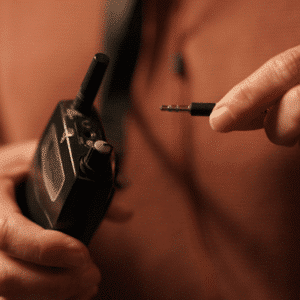
We use an audio system in most of our sky shows. 

You should remember to bring your 3.5mm round plug/jack earphones – or you can purchase some when making an online booking if they are required for your event.

The following earphone connectors are not suitable – flat-style Apple Lightning, USB, Bluetooth or WiFi.